

How to Safely Change a Flat Tire
Getting a flat tire is something every driver will experience sooner or later. While changing a tire isn’t complicated, doing it safely is another story. As a towing company serving drivers across Oahu, we’ve responded to countless flat tire calls over the years. One thing I’ve learned is that the flat tire itself usually isn’t the biggest danger—traffic is.
I’ve seen people trying to change tires just inches away from fast-moving vehicles, using jacks incorrectly, and continuing to drive on destroyed tires because they thought they could make it “just a little farther.” Those situations are far more dangerous than the flat tire itself.
In this guide, I’ll walk you through how to safely change a flat tire, when you should avoid doing it yourself, and some lessons I’ve learned from years of roadside assistance.
Before You Even Think About Changing the Tire, Get to Safety
The first thing you should do after realizing you have a flat tire is not grab the jack.
Your priority should be getting yourself away from traffic.
If your vehicle is still drivable, slowly move as far off the roadway as possible. Don’t stop immediately if you’re blocking a lane or sitting on a narrow shoulder. Driving a short distance at a slow speed to reach a much safer location is often the better decision than stopping in a dangerous spot.
Once you’re safely out of traffic:
- Turn on your hazard lights.
- Put the vehicle in Park if it’s an automatic.
- Leave a manual transmission in gear.
- Set the parking brake.
- Use wheel chocks if you have them.
Too many people skip these basic safety steps, and that’s when vehicles begin rolling or shifting while they’re being lifted.
Make Yourself Visible to Other Drivers
One of the biggest mistakes I see is drivers assuming their hazard lights are enough.
They’re not.
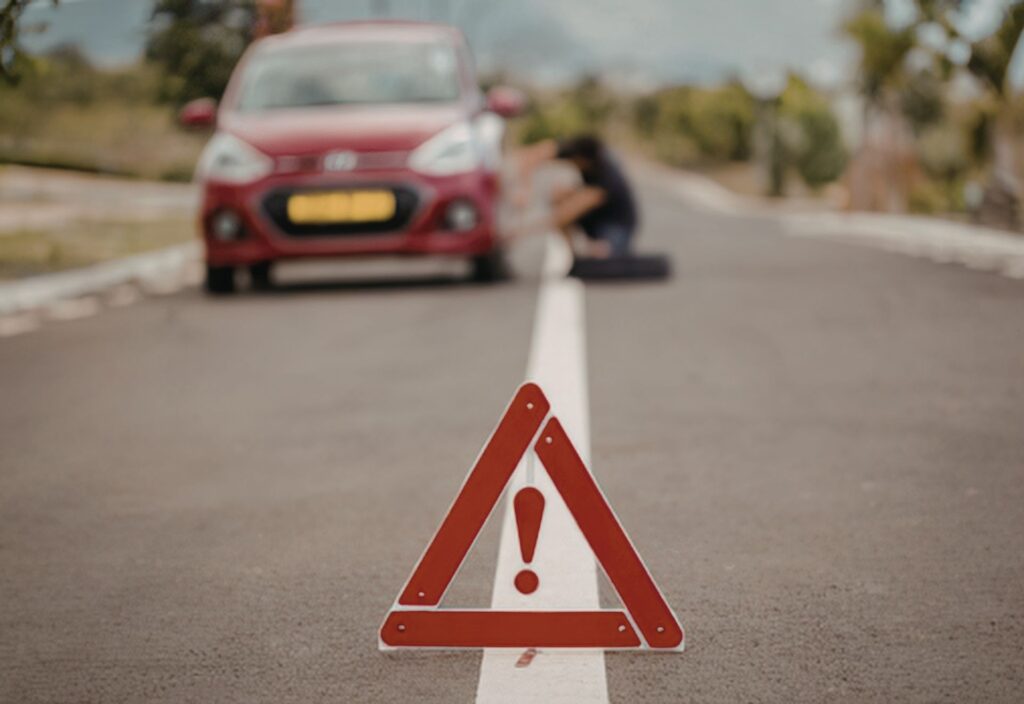
If you have emergency warning triangles or safety cones, place them behind your vehicle to alert approaching traffic that there’s a disabled vehicle ahead. I also recommend carrying road flares and using them whenever it’s safe to do so—even during daylight hours. Anything you can do to increase your visibility gives approaching drivers more time to react.
This is inexpensive safety equipment that every vehicle should carry, and it can make a huge difference.
Gather Your Equipment Before You Start
Before lifting the vehicle, make sure you have everything you’ll need:
- Spare tire
- Vehicle jack
- Lug wrench
- Wheel chocks (preferred)
- Flashlight if visibility is poor
- Warning triangles or cones
- Road flares
If you’re missing essential tools, don’t try to improvise. It’s much safer to call for roadside assistance than risk damaging your vehicle or injuring yourself.
If you’re missing essential tools, don’t try to improvise. It’s much safer to call for roadside assistance than risk damaging your vehicle or injuring yourself. A professional can safely replace your tire or tow your vehicle to a secure location if changing it on the roadside isn’t safe.
Loosen the Lug Nuts Before Raising the Vehicle
One mistake many people make is trying to loosen the lug nuts after the tire is already off the ground.
Always break the lug nuts loose while the tire is still firmly on the ground. This keeps the wheel from spinning and makes the job much easier.
You don’t need to remove the lug nuts completely yet—just loosen them enough so they’ll come off once the vehicle has been raised.
Make Sure the Jack Is Positioned Correctly
This is one of the most important parts of the entire process.
Every vehicle has designated jack points designed to support the weight of the vehicle. If you place the jack somewhere else, you risk damaging the vehicle or causing the jack to collapse.
I responded to a customer who learned this the hard way.
They had placed the jack underneath a part of the vehicle that wasn’t designed to support its weight. The jack collapsed underneath the car and became trapped. The customer couldn’t remove it or safely continue changing the tire.
We had to bring a second jack, carefully lift the vehicle, remove the damaged jack, and then properly change the tire.
Fortunately, no one was hurt, but it could have ended much worse.
Always consult your owner’s manual to locate the proper lifting points before raising your vehicle.
Remove the Flat Tire and Install the Spare
Once the vehicle is safely lifted:
- Finish removing the lug nuts.
- Remove the flat tire.
- Install the spare tire.
- Hand-tighten the lug nuts.
Lower the vehicle until the tire contacts the ground, then tighten the lug nuts securely using the proper tightening pattern recommended by your vehicle manufacturer.
Know When Not to Change Your Own Tire
One thing that surprises many people is that even as a professional towing company, there are situations where we won’t change a flat tire on the side of the road.
If the vehicle is stopped in a dangerous location with very little shoulder, poor visibility, or severe weather, our priority isn’t changing the tire.
Our priority is getting the customer out of danger.
In those situations, we’ll tow the vehicle to a tire shop or another safe location where the tire can be changed without exposing anyone to unnecessary risk.
If professionals decide the roadside isn’t safe enough to perform the work, that’s a good indication that you shouldn’t attempt it yourself either.
Situations Where You Should Call for Help Instead
I recommend calling for roadside assistance if:
- You’re too close to moving traffic.
- The shoulder isn’t wide enough to work safely.
- Weather conditions reduce visibility.
- You don’t have the proper tools.
- You aren’t confident changing the tire.
- The wheel or suspension appears damaged.
- The spare tire isn’t usable.
There’s no shame in asking for help. The goal is getting home safely—not proving you can change a tire.
Never Continue Driving on a Flat Tire
Another mistake I see regularly is people continuing to drive after the tire has completely failed.
Many drivers hope they can make it to the next gas station or tire shop.
Unfortunately, driving on a flat tire often destroys the wheel itself. What could have been a simple tire replacement can quickly become an expensive wheel replacement as well.
If the tire is flat, stop as soon as it’s safe to do so.
Keep an Emergency Kit in Your Vehicle
Every driver should have a basic roadside emergency kit.
I recommend carrying:
- Warning triangles or safety cones
- Road flares
- Flashlight
- Spare tire
- Jack
- Lug wrench
- Wheel chocks
- Work gloves
Having these items ready before you need them can make a stressful situation much easier to handle.
Don’t Forget About Your Spare Tire
One of the most overlooked parts of vehicle maintenance is the spare tire.
Many people assume it’s ready to use simply because it’s never been driven on.
That’s not always true.
A spare tire can lose air over time or deteriorate simply from sitting unused for years. The last thing you want is to discover your spare is flat or unsafe when you’re stranded on the side of the road.
Make checking your spare tire part of your regular vehicle maintenance.
Final Thoughts
Knowing how to safely change a flat tire is an important skill, but knowing when not to do it is just as important.
In my experience, most roadside injuries don’t happen because someone didn’t know how to change a tire—they happen because they underestimated the danger of traffic or ignored basic safety precautions.
Always put your safety first. Move as far away from traffic as possible, make your vehicle highly visible, use the proper lifting points, and don’t hesitate to call for help if conditions aren’t safe.
Finally, don’t wait until you have a flat tire to think about your tires. Have all four tires inspected regularly, and don’t forget to inspect your spare. Making sure every tire on your vehicle is roadworthy is one of the simplest ways to reduce the chances of finding yourself stranded in the first place.