

When people search for the history of Ewa Beach, they will find stories about sugar plantations, plantation workers, old villages, and the tremendous development that eventually transformed this part of Oahu.
All of that is important.
But for those of us who grew up nearby, the history of Ewa Beach is also personal.
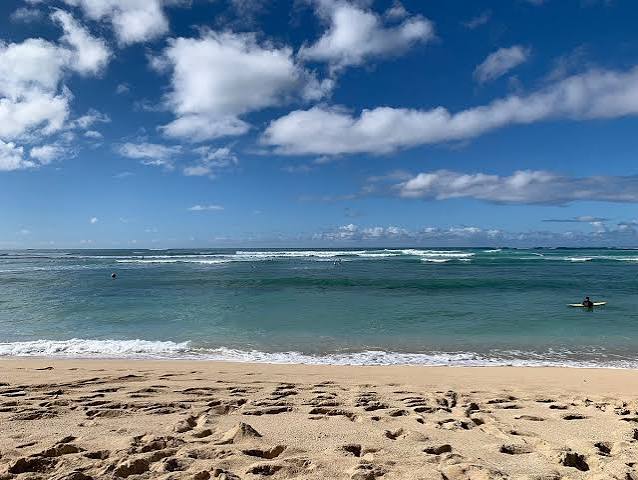
It is Hau Bush and White Plains Beach.
It is picking limu with family.
It is fried noodles and pork hash from the manapua lady near Campbell High School.
It is Shiro’s Saimin Haven.
And it is watching a quiet community surrounded by open land grow into one of West Oahu’s major suburban areas.
Growing up in Waipahu, Ewa Beach was the next town over. We watched it change tremendously over the years.
Yet despite all that growth, there are still pieces of the Ewa Beach I remember.
Ewa Beach Before the Sugar Plantations
The history of Ewa goes back much further than sugarcane or modern development.
Native Hawaiians lived throughout the Ewa Plain long before the plantation era. The larger Honouliuli ahupuaʻa supported agriculture, fishing, aquaculture, and other resources that helped communities remain self-sufficient.
That connection between the land and ocean is an important part of understanding Ewa.
Long before modern subdivisions covered much of the surrounding area, people depended on what the land and ocean provided.
For me, one small piece of that connection survives in my childhood memories of gathering limu.
Growing Up, Ewa Beach Meant Hau Bush
Oneʻula Beach Park is better known to many longtime locals by another name:
Hau Bush.
Growing up, we would go there with family.
One of my strongest memories is picking limu.
Back then, I remember limu being much more abundant. We could gather enough to bring home and prepare for our family.
As a child, I didn’t think much about how special that was.
It was simply something we did.
As I grew older, I began to appreciate those memories differently.
Today, the limu isn’t completely gone, but from what I personally remember, it is nowhere near as abundant as it once was. You can’t simply expect to find the amounts we remember gathering when we were young.
That change isn’t only something I noticed.
Historical reporting from Ewa Beach documented longtime residents remembering Oneʻula as an area where limu once grew in tremendous abundance. By 2000, community members were already working to restore it and prevent overharvesting.
Knowing that makes those childhood memories even more meaningful to me.
White Plains Beach and Growing Up Near the Ocean
Another place that immediately makes me think about Ewa is White Plains Beach.
White Plains has long been one of those places where you can enjoy the ocean without needing anything complicated.
Catch some waves.
Go bodysurfing.
Spend time with family and friends.
For those of us who grew up on this side of the island, places like White Plains and Hau Bush weren’t tourist attractions.
They were simply part of life.
That is an important part of Ewa Beach history too.
History isn’t only what happened 100 years ago.
It is also the places generations of local families grew up enjoying together.
The Rise of the Ewa Sugar Plantation
Sugar dramatically changed Ewa.
The Ewa Plantation Company was organized in 1890. During its first year, the company drilled wells, planted hundreds of acres of sugarcane, and employed Japanese plantation workers.
Over time, workers from Japan, the Philippines, China, Korea, Portugal, and other backgrounds became part of plantation life.
The plantation eventually constructed more than 1,200 residences across several worker villages.
Those communities helped shape the culture of Ewa and contributed to the multicultural local community that exists today.
The Plantation Villages of Ewa
Some physical reminders of that era still survive.
The historic Ewa Sugar Plantation Villages include plantation-era homes and buildings connected to the workers and families who built their lives around the sugar industry.
The neighborhoods were once separated by sugarcane fields.
Today, the landscape surrounding them looks very different.
But seeing those older homes provides a reminder of what Ewa once was.
Before the master-planned neighborhoods, golf courses, shopping centers, and thousands of newer homes, this was plantation country.
When the Sugarcane Fields Became Neighborhoods
Anyone who remembers Ewa Beach decades ago knows how dramatic the change has been.
There was much more open land.
There were sugarcane fields.
There were fewer houses, fewer stores, and less traffic.
Over time, much of that landscape changed.
The City and County of Honolulu’s Ewa Development Plan documents how residential growth expanded in the region and how thousands of acres of agricultural land were eventually converted as plantations closed and new communities and employment centers were developed.
Today, communities such as Hoakalei represent a very different Ewa Beach.
Newer subdivisions, modern homes, shopping, recreation, and other amenities have transformed the area into a major suburban community.
I Think Ewa Beach’s Growth Has Been Good
It is easy to look at an old photograph and say everything was better before.
That isn’t how I see Ewa Beach.
I miss parts of the old Ewa.
I miss the open spaces.
I remember when traffic wasn’t what it is today.
And I especially miss being able to gather the amount of limu we remember from Hau Bush.
But overall, I think the growth has been good.
Families now have more homes, stores, restaurants, services, and conveniences closer to where they live.
Ewa Beach has become a place where families can build their lives without having to leave the community for everything they need.
Growth always brings challenges, especially traffic and infrastructure.
But change isn’t automatically bad.
Ewa Beach grew because people wanted to live there.
Some Things in Ewa Still Feel Familiar
One of the things I enjoy about Ewa Beach is finding something that reminds me of the community I remember.
For me, food is a big part of that.
There is still the manapua lady near Campbell High School who I remember for local favorites such as fried noodles and pork hash.
Those kinds of small local food traditions matter.
They may never appear in a history textbook, but ask someone who grew up in the area and they may immediately know what you’re talking about.
That is local history too.
Shiro’s Saimin and Local Comfort Food
Another familiar name in Ewa Beach is Shiro’s Saimin Haven.
Shiro’s history actually began outside Ewa.
Franz “Shiro” Matsuo opened his first Shiro’s Saimin Haven in Aiea in 1969. The restaurant later moved to Waimalu, and another location eventually opened in Ewa Beach.
More than five decades after the original restaurant opened, Shiro’s remains a local name associated with saimin and Hawaii comfort food.
That makes it a natural fit in Ewa Beach.
As neighborhoods change and new businesses arrive, longtime local restaurants help preserve a connection to the Hawaii many of us remember.
Old Ewa and New Ewa
Today, you can clearly see different periods of Ewa Beach’s history simply by driving through the community.
There are areas that still remind you of plantation-era Ewa.
Then there are newer neighborhoods with modern homes, planned streets, community amenities, and completely different architecture.
I don’t think one has to replace the other in the story of Ewa Beach.
They are both part of it.
The older communities show where Ewa came from.
The newer communities show where Ewa is going.
The People of Ewa Beach Are Rooted
Buildings and roads can change quickly.
Communities take much longer to build.
One thing that stands out to me about Ewa Beach is how rooted many of its people are.
There are families who have watched this community change for decades.
They remember the sugarcane.
They remember the open land.
They remember old Ewa before today’s subdivisions existed.
At the same time, newer families have made Ewa Beach their home and are now creating their own memories here.
That combination is part of what Ewa Beach has become.
Serving Ewa Beach Through All That Change
Our connection to Ewa Beach today also comes through our work.
Hawaii Towing Company has provided towing and roadside assistance throughout Oahu for more than 15 years.
During that time, we have watched Ewa Beach continue to grow.
More homes mean more families.
More families mean more vehicles traveling through the community every day.
And despite all the physical changes, we still get to meet the longtime residents who remember an entirely different Ewa Beach.
We are proud to provide towing services in Ewa Beach to both longtime residents and newer families who now call the community home.
The Ewa Beach I Remember
You can tell the history of Ewa Beach through plantation records, development plans, historic homes, and old photographs.
Those things matter.
But my history of Ewa Beach looks a little different.
It is being a kid from Waipahu and knowing Ewa Beach as the next town over.
It is going to Hau Bush with my family.
It is bending down near the shoreline and picking limu to bring home.
It is catching waves and bodysurfing at White Plains.
It is fried noodles and pork hash near Campbell High School.
It is Shiro’s Saimin.
It is remembering sugarcane and open land where neighborhoods now stand.
And it is watching families put down roots as Ewa Beach continues to grow.
When I was young, I never thought picking limu with my family would someday become a memory I treasured.
But that’s the funny thing about growing up.
Sometimes the ordinary things are the ones you miss the most.